There are few people in history who have been talked about as much as Jesus.
Even people who have little interest in Christianity usually have some idea of who they think he was. A good teacher. A religious leader. A moral example. Perhaps even a prophet.
But Jesus never really leaves those options open to us.
When he asked his disciples, “Who do you say that I am?” (Matt. 16:15), he was asking a question every one of us eventually has to answer.
And the Bible’s answer is extraordinary.
Jesus is God the Son, who became truly human, came to save sinners, died in their place, rose from the dead, and now reigns as Lord.
That is who Jesus is.
The God Who Came Near
The story of Jesus does not really begin in Bethlehem.
John takes us much further back:
“In the beginning was the Word, and the Word was with God, and the Word was God.”John 1:1
Before there was a manger, before Mary and Joseph, before Bethlehem, before creation itself, the Son was there.
Then John tells us something remarkable: “The Word became flesh and dwelt among us” (John 1:14).
God did not simply send us another prophet. He did not shout instructions to us from a safe distance. The eternal Son of God entered the world he had made.
Jesus became genuinely human.
He knew hunger and exhaustion. He had friends. He wept at the grave of Lazarus. He experienced suffering and temptation. Yet unlike us, he never sinned.
Jesus is not half God and half man. He is truly God and truly man.
We needed more than a teacher. We needed a Saviour.
Why Did He Come?
It is easy to reduce Jesus to someone who teaches us how to live a better life.
Certainly, Jesus taught us how we ought to live. But if that were all he came to do, we would still be lost.
Our deepest problem is not that we need better advice. It is that we have sinned against the God who made us.
Paul writes plainly:
“For all have sinned and fall short of the glory of God.”Romans 3:23
We tend to make sin smaller than it really is. We compare ourselves with other people and reassure ourselves that we aren’t that bad.
But God is not grading humanity on a curve.
The standard is his own perfect holiness, and every one of us has fallen short.
That is why Jesus came.
He lived the life we have failed to live. He perfectly loved his Father. He perfectly obeyed. He was without sin.
And then he went willingly to the cross.
The King on a Cross
At first glance, the crucifixion looks like defeat.
Jesus is mocked, beaten, nailed to a cross, and left to die. The one who claimed to be the Messiah appears powerless.
But the cross was not an accident.
Jesus had come for this.
Isaiah had written centuries earlier:
“The LORD has laid on Him the iniquity of us all.”Isaiah 53:6
On the cross, Jesus stood in the place of sinners.
He bore the judgment that our sin deserves so that those who trust in him could receive what they could never earn: forgiveness, righteousness, and peace with God.
Paul puts it this way:
“For He made Him who knew no sin to be sin for us, that we might become the righteousness of God in Him.”2 Corinthians 5:21
This is the heart of Christianity.
We do not save ourselves by becoming respectable enough for God. We do not work our way upward until eventually he accepts us.
God came down to us. Christ did what we could not do. And at the cross, he took the place of guilty people.
But Jesus Didn’t Stay Dead
Christianity would have nothing to say if the story ended at the tomb.
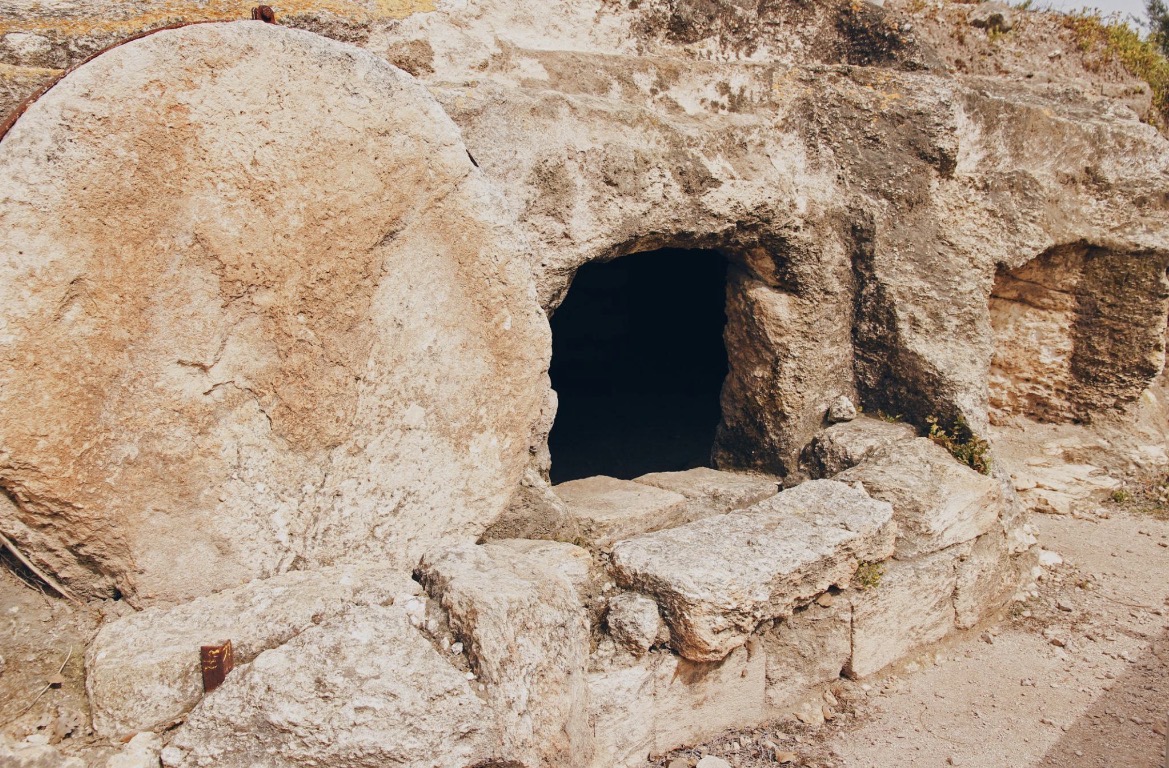
But on the third day, the tomb was empty.
Jesus rose.
Not merely in the memories of his disciples. Not as a symbol that his teaching would live on. Jesus Christ actually rose bodily from the dead.
The resurrection changes everything.
Death, the great enemy of humanity, had been defeated. Sin had been paid for. Christ’s work was complete.
The man who had been crucified was alive.
And he still is.
Jesus is not simply a figure from history whom Christians happen to admire. Christians worship a living Saviour.
Jesus Is Lord
That brings us to something we can easily miss.
Jesus does not simply offer forgiveness. He claims our lives.
After his resurrection, he told his disciples:
“All authority has been given to Me in heaven and on earth.”Matthew 28:18
All authority.
Jesus is Lord whether we acknowledge him or not.
He is not asking to become a useful addition to an otherwise unchanged life. He calls us to repent, trust him, and follow him.
That can sound costly—and it is.
But look at the one who calls us.
This is the King who went to a cross for his people. The Lord who welcomes sinners. The Shepherd who lays down his life for his sheep.
The Christian does not obey Jesus in order to persuade him to love us. We follow him because he loved us first.
Who Do You Say He Is?
Eventually, Christianity becomes personal.
You can know what Christians believe about Jesus. You can understand the doctrine. You can know the Bible stories. You can even agree that Jesus was a remarkable man.
But Jesus’ question remains:
“Who do you say that I am?”
The Bible’s answer could hardly be greater.
Jesus is the eternal Son of God.
He is the Word made flesh.
He is the promised Messiah.
He is the friend of sinners.
He is the Lamb who was slain.
He is the risen Saviour.
He is the Lord who reigns.
And he is the King who will come again.
Christianity ultimately rests on him.
Not on our goodness.
Not on our religious performance.
Not on our ability to fix ourselves.
On Christ.
And the invitation of the gospel is wonderfully simple: turn from your sin and come to him.
Because the Jesus who asks, “Who do you say that I am?” is the same Jesus who says:
“The one who comes to Me I will by no means cast out.”John 6:37